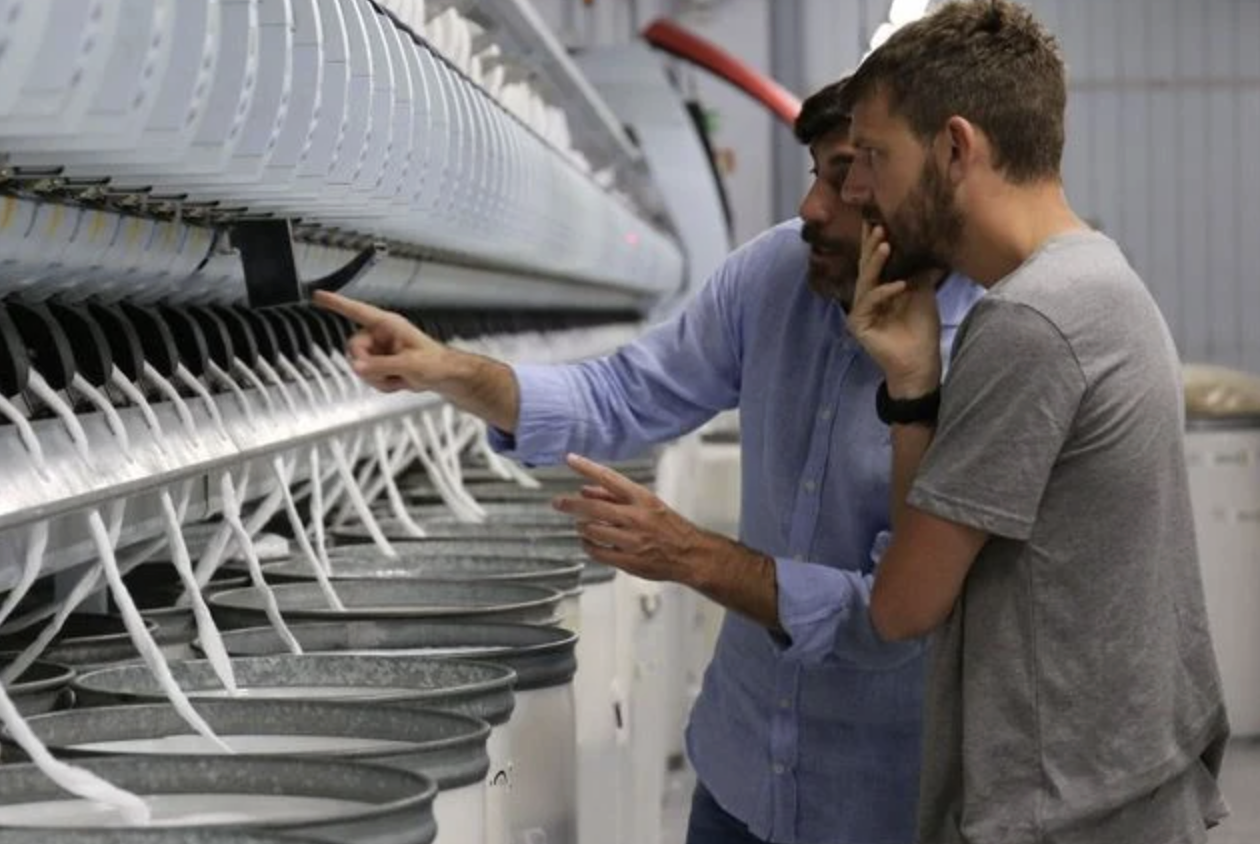
Most garments are designed for a single life cycle. They are conceived, manufactured, sold, worn, and ultimately discarded. Even when made from high-quality materials, the majority are not engineered with their second life in mind. Designing clothing for reuse requires a fundamentally different mindset—one that treats every fibre as a future resource rather than a disposable input.
At TrulyCircular.com, reuse is not an afterthought or a marketing layer. It is embedded at the product development stage, influencing material selection, construction techniques, printing methods, fulfilment logistics, and end-of-life recovery systems. This article takes you behind the scenes to explore how garments are deliberately engineered for multiple life cycles.
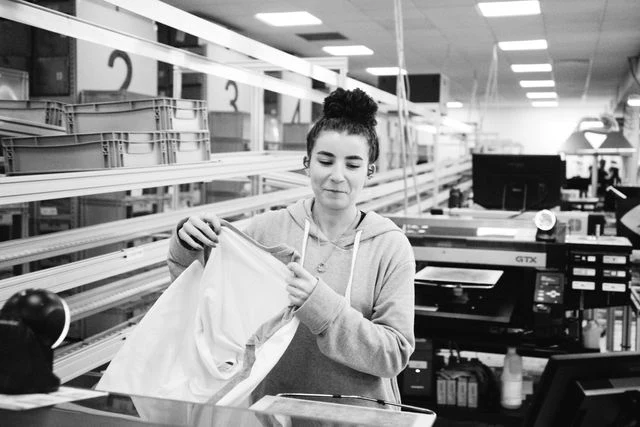
Our products are made by some incredible humans, like Amelia here. Working alongside advanced technology that makes sustainability possible means that instead of trying to replace people with robots, a little automation is sprinkled on conscientiously in the right place so the repetitive and boring parts of working in production are gone- leaving more time to work on making things that last, and that don’t cost the Earth. That’s why we chose to work with Teemill to produce our brand’s products: When you shop with us, it means better products and better outcomes for the environment and the people involved.
Material First: Designing for Recoverability
Reuse begins with fibre selection.
Blended fabrics may enhance stretch or reduce costs, but they are notoriously difficult to recycle. Separating mixed fibres at scale is complex and often impractical. To avoid this barrier, TrulyCircular.com prioritises mono-material garments. By using single-fibre compositions, products can be mechanically processed back into raw fibre at end-of-life without requiring chemical separation.
Equally important is avoiding toxic treatments or finishes that could compromise recyclability. A reusable garment must be both durable in use and recoverable in breakdown.
Construction with End-of-Life in Mind
Seams, threads, labels, and trims all influence recyclability. Mixed-material stitching or unnecessary hardware can contaminate fibre recovery streams.
Behind the scenes, construction is simplified and standardised. Components are selected to minimise contamination and maximise processing efficiency when garments are returned. What appears to be a simple T-shirt is, in reality, the result of deliberate architectural choices that determine whether it becomes waste or feedstock.
Print Compatibility and Circular Design
Graphic apparel introduces additional complexity. Conventional inks can introduce synthetic compounds that interfere with recycling.
To address this, TrulyCircular.com integrates water-based printing methods compatible with fibre recovery processes. Ink selection is aligned with the same circular criteria as fabric choice: longevity during wear, compatibility during remanufacture.
Design for reuse means aesthetic performance cannot undermine material recovery.
On-Demand Production: Preventing Waste Before It Exists
Reuse loses credibility if garments are overproduced and discarded before reaching consumers. Circular design must extend beyond the garment into the production model itself.
TrulyCircular.com operates on an on-demand basis, manufacturing only after purchase. This eliminates surplus inventory and reduces unnecessary resource extraction. Every item produced enters the use phase with intention, not speculation.
Preventing waste is as important as reclaiming materials.
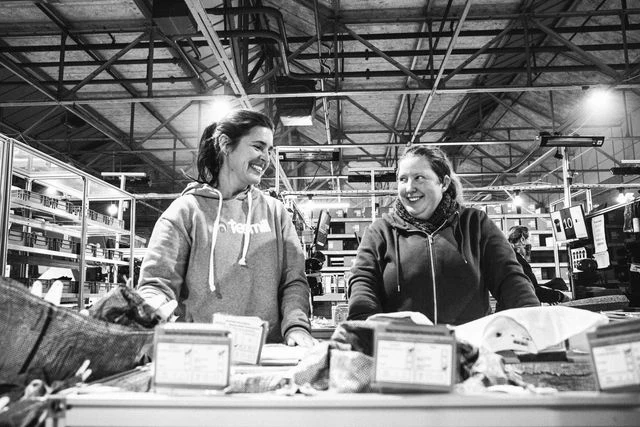
Every product on our store gets quality checked at every stage of production. And even though the factories they’re made in have some super snazzy software and manufacturing technology, the most important ingredient – as with all things in life – is great people. Charlotte here is helping Vicky, and their partnership is special because on one side it requires lip reading. At this stage, they’re having a conversation. Chief of wonkiness, Charlotte, is showing Vicky her wonkiness test. Nothing gets by these two. So, with people like Charlotte and Vicky on the case, you can know that every product you order is handled with care, by real humans.
Closing the Loop: Engineering the Return Pathway
A reusable garment must have a clear route back into production. Without a structured return system, even recyclable products risk landfill disposal.
TrulyCircular.com integrates prepaid return pathways, enabling worn garments to be sent back for fibre recovery. Once received, items are processed and remade into new yarn, completing the loop.
Reuse depends on both technical design and behavioural participation. By simplifying returns, the system increases the likelihood that materials remain in circulation.
Renewable Energy as a Supporting Infrastructure
Recycling powered by fossil fuels undermines environmental gains. Designing for reuse must include energy considerations.
Production and remanufacturing processes are supported by renewable electricity, reducing carbon intensity across cycles. This ensures each reuse iteration represents genuine environmental progress rather than impact displacement.
Rethinking What a Garment Is
Designing clothing for reuse reframes the garment itself. It is no longer a finished product with a finite lifespan. It is a temporary configuration of valuable raw material.
At TrulyCircular.com, fibres are treated as assets in continuous circulation. Garments are worn, returned, remade, and worn again—transforming consumption into participation.
Conclusion
Designing for reuse requires systems thinking. Material intelligence, construction discipline, print compatibility, on-demand production, renewable energy integration, and structured return pathways must align.
This is not recycling added at the end. It is circularity embedded at the beginning.
Behind every reusable garment lies an infrastructure designed to ensure it does not become waste—but instead becomes the foundation for what comes next.